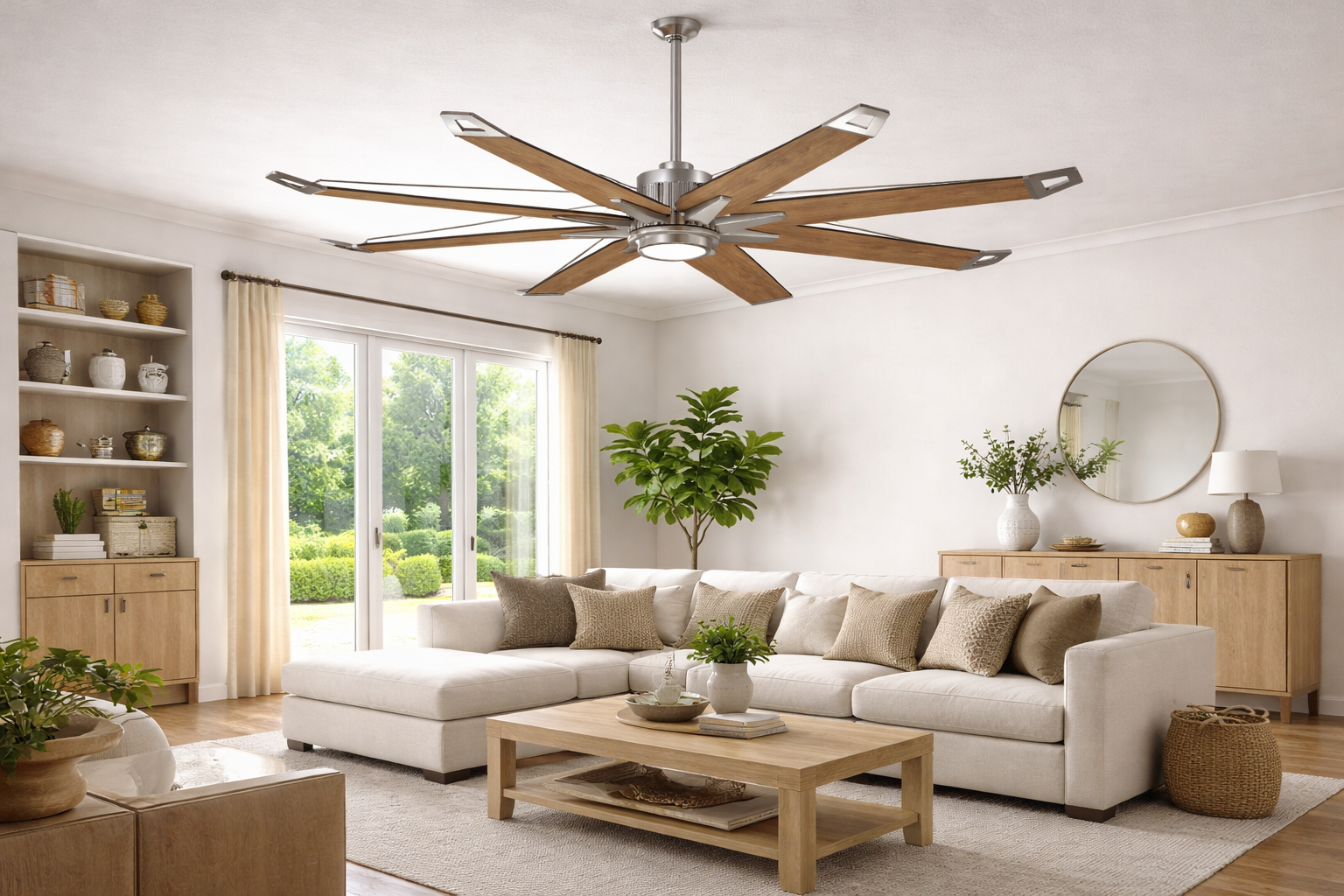
Ceiling Fan Selection Guide: How to Choose the Right Fan
Choosing a ceiling fan involves more than picking a style you like. Room size, ceiling height, and installation environment all play a critical role in performance.

A ceiling fan speeds up indoor air circulation and ranks as one of the most energy-efficient home appliances available. But choosing the right one takes a little more thought than simply picking a style. Here is a practical guide to the key decisions.
Choose the Right Size
Ceiling fans come in a wide range of blade-span sizes, typically measured in inches. The starting point for sizing is the room's floor area:
- Up to 10m²: 36" fan - 10–20m²: 42"–48" fan - 20–35m²: 52" fan - Over 35m² or open-plan spaces: 56"–60" fan, or multiple fans
The underlying principle is simple: a larger room needs a longer blade span to move a sufficient volume of air to the whole space. If in doubt, it is generally better to go slightly larger — an oversized fan run at medium speed is far less annoying than an undersized fan running flat out.
Do Not Overlook Ceiling Height
After room size, ceiling height is the most critical factor in ceiling fan performance. For the fan to deliver its rated airflow and operate safely, the following clearances are required: - Minimum 300mm between the fan blade tips and any wall - Minimum 220mm between the fan body and the ceiling - Minimum 2,300mm between the blade plane and the floor
If the ceiling height is greater than 3 metres, a downrod extension will be required to lower the fan to its optimal operating height. Without sufficient clearance from the ceiling, airflow efficiency drops considerably.
Consider Outdoor or Coastal Environments
If you are installing a ceiling fan on a covered terrace, veranda, or outdoor dining area, standard indoor fans are not suitable. Look specifically for fans rated for outdoor or damp-location use. These fans use sealed motors and corrosion-resistant blade and hardware materials.
Homes near the sea — including many locations along Cambodia's coast — require particular attention. Salt air accelerates corrosion dramatically, and even "outdoor" fans should ideally have marine-grade or full rust-proof specifications if installed within a few hundred metres of the shoreline.
Have It Professionally Installed
Ceiling fan installation involves working with ceiling wiring and mounting hardware that must support a rotating load. This is not a task for guesswork. Always engage a licensed electrician — particularly in older buildings where existing wiring may not be rated for a fan circuit, or where ceiling structures may need reinforcement. A correctly installed fan is safe and silent; a poorly installed one can be neither.