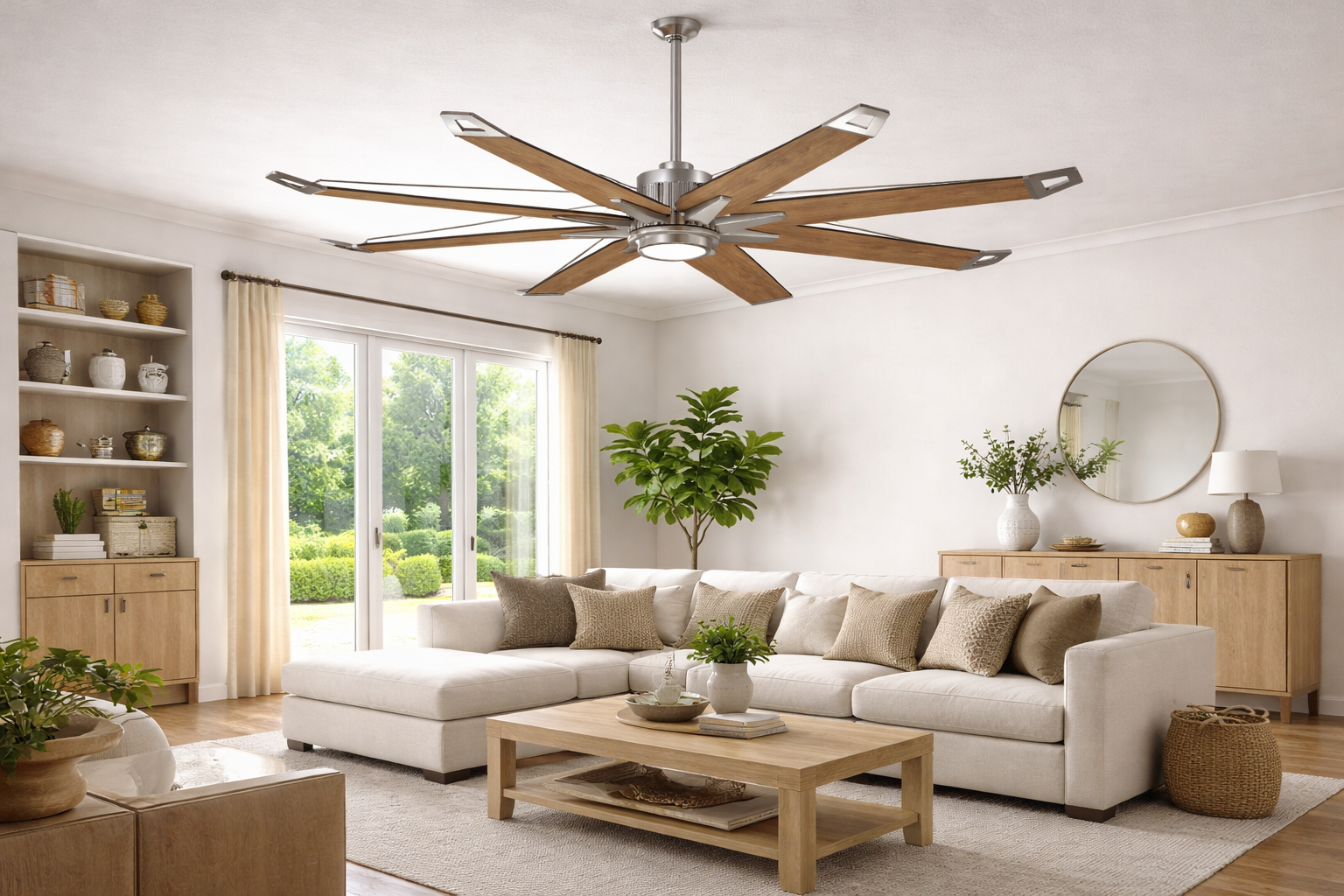
Ceiling Fan Lights Purchasing Tips: What to Look For
When shopping for ceiling fan lights, appearance matters — but so does the motor quality and light driver. Here is what to evaluate before you buy.

Choosing a ceiling fan light well means looking beyond the showroom photo. The fixture needs to perform reliably for years, look good in your space, and be quiet enough not to distract. Here are the key factors to evaluate.
1. Appearance and Design
Compared to a traditional bare ceiling fan, fan lights offer noticeably better acoustic performance — quieter operation, more uniform airflow, and a softer wind speed that feels gentler on the skin. However, in terms of visual impact, a purely functional fan light may fall slightly short when compared to a dedicated decorative pendant light.
For this reason, it is worth spending time on the appearance. The fan light should not only move air efficiently — it should also look intentional and appropriate in the room. Evaluate the finish quality, the blade material and colour, the light kit design, and how the overall proportions will look at ceiling height in your specific space.
2. Motor Quality: The Heart of the Fan
A fan light that looks excellent but has a poor motor will disappoint quickly. The motor determines how quietly, efficiently, and reliably the fan runs. When evaluating motor quality:
- Look for fans using copper-wound motors rather than aluminium-wound equivalents — copper conducts electricity more efficiently and generates less heat. - DC brushless motors are the current standard for quality ceiling fans. They run quieter, use significantly less energy (typically 30–70% less than AC motors), and last longer. - Check the rated wattage at maximum speed. A quality DC motor fan should draw 35–50W for a standard 52" model. If the wattage seems very high for the blade span, the motor efficiency is likely poor.
3. Light Source and Driver Quality
The lighting component of a ceiling fan light deserves the same scrutiny as the fan motor. Two elements matter:
- LED light source: Look for high colour rendering index (CRI ≥ 80, ideally ≥ 90) for natural, comfortable light. Check the colour temperature — 3,000K is warm white (suitable for bedrooms and living rooms), 4,000K is neutral white (good for kitchens and work areas). - Driver electronics: A low-quality LED driver causes flickering, buzzing, or inconsistent dimming. Quality fan lights use constant-current drivers with proper heat dissipation. Flickering at any speed setting is a sign of a poor driver.
4. Noise at All Speed Settings
Test or enquire about noise across all speed settings — not just the maximum. Some fans are quiet at low speed but develop a noticeable hum or blade noise at medium and high speeds. A good ceiling fan should be perceptibly quiet at all settings. The motor, blade balance, and mounting hardware all contribute to the overall noise profile.
5. Warranty and After-Sales Support
Finally, check the warranty terms and whether spare parts — particularly light bulbs, remote control receivers, and blade sets — are available locally. A one-year minimum warranty on the motor is standard for quality products; two years is better. Ensure the supplier or distributor has a local presence and can provide technical support if needed.